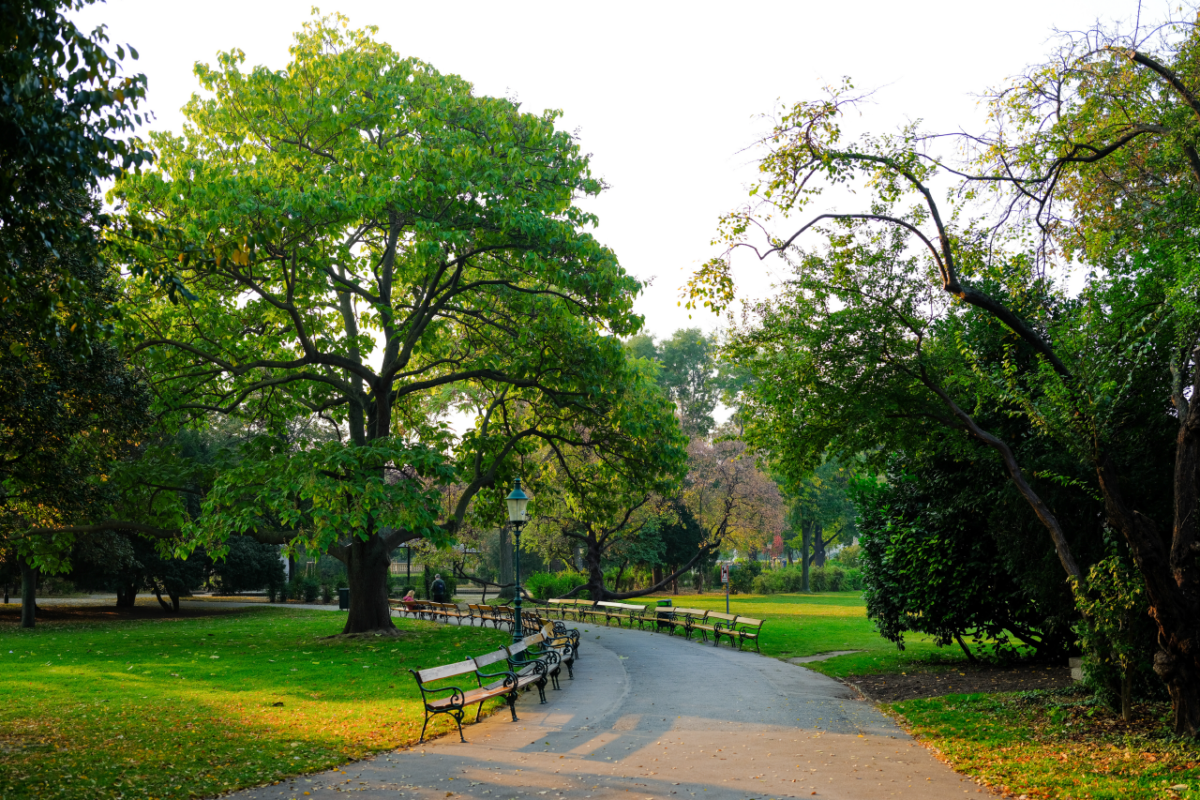
The Volksgarten directly adjoins the Burggarten and is known above all for its enchanting rose garden. This park is likewise part of the Hofburg complex and was originally, from the 16th century, a fortress site. However, the fortifications were destroyed in 1809 by Napoleon’s troops. Only afterwards was the garden complex constructed in the early 19th century by the landscape architect Ludwig Remy and finally completed in 1823. From this point on, the Volksgarten was the first public park in Vienna.
At the centre of the Volksgarten stands the Neo-Classicist Theseus Temple, which was built according to the plans of Pietro di Nobile. The temple is a small replica of the Temple of Hephaestus in Athens and was originally meant to house the Theseus statue by Antonio Canova. That is why Canova himself was also involved in the construction of the temple. In the end, however, the statue ended up in the Kunsthistorisches Museum next door.
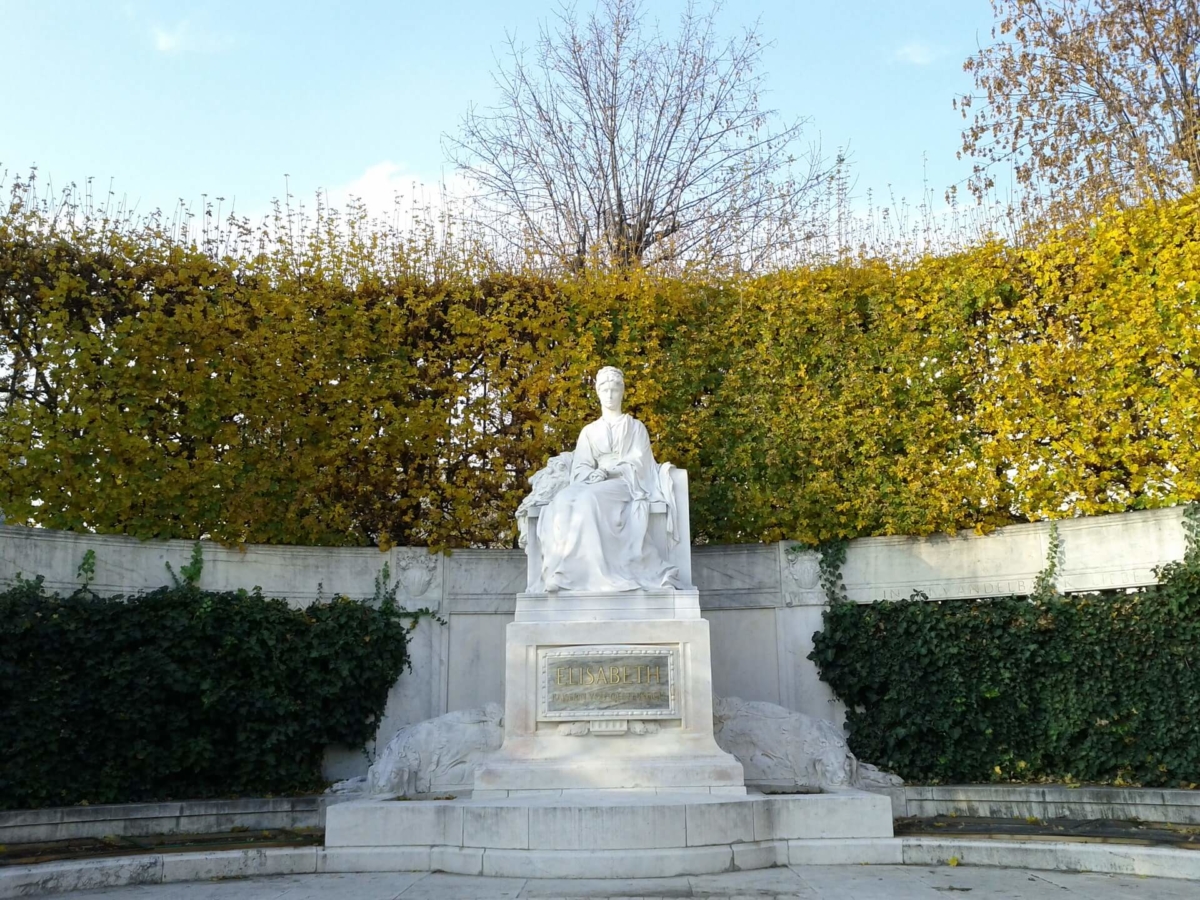
Another fixed point in the Volksgarten is the imposing Grillparzer Monument by Carl Kundmann. But the seated Empress Elisabeth by Hans Bitterlich also impresses as a marble statue 2.5 metres high.
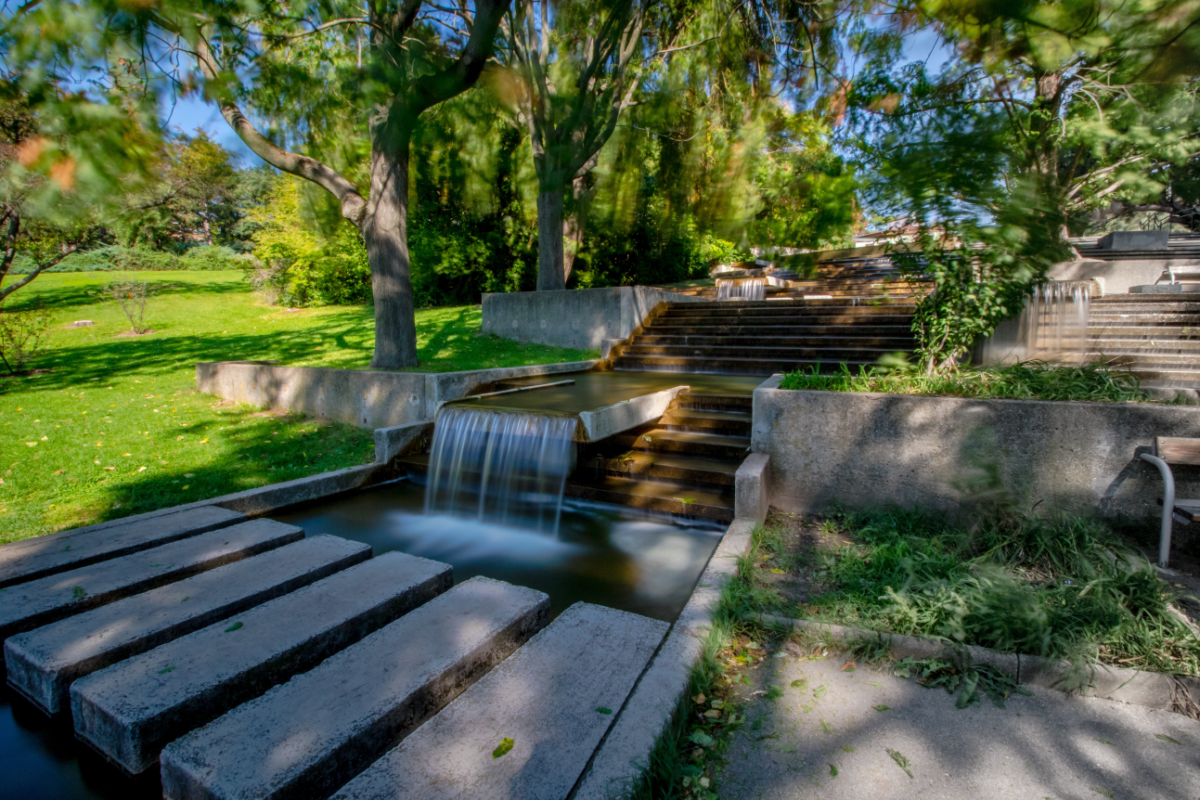
Popular meeting points are also the two fountains in the Volksgarten. These are the Triton and Nymph Fountain by Viktor Tilgner and the Volksgarten Fountain by A. D. Fernkorn.
But the highlight is and remains the rose garden, which awaits you on the Ringstraße side of the Volksgarten. Here, in summer, 400 different rose varieties bloom on over 3,000 rose bushes. An inspiring place!
For a refreshment, the Café-Meierei in the Volksgarten is recommended. In this picturesque pavilion, you can have breakfast to your heart’s content or enjoy a Viennese Melange.