Museums

Explore art, history, science and culture in Vienna.
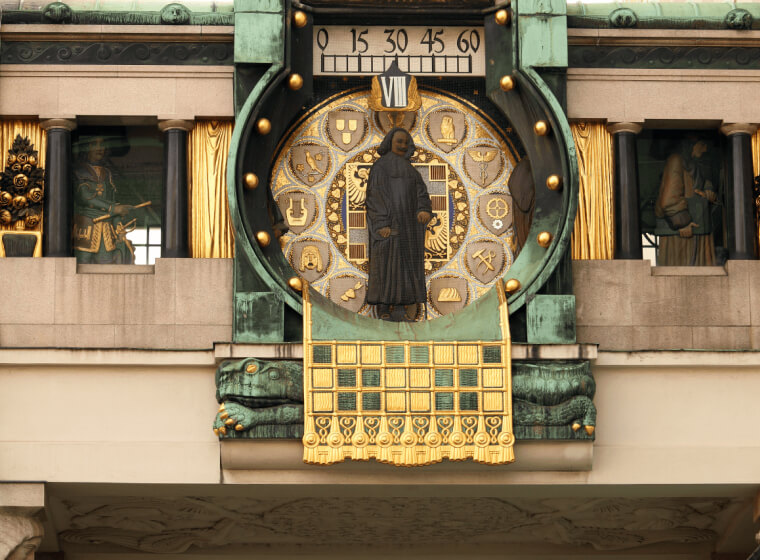
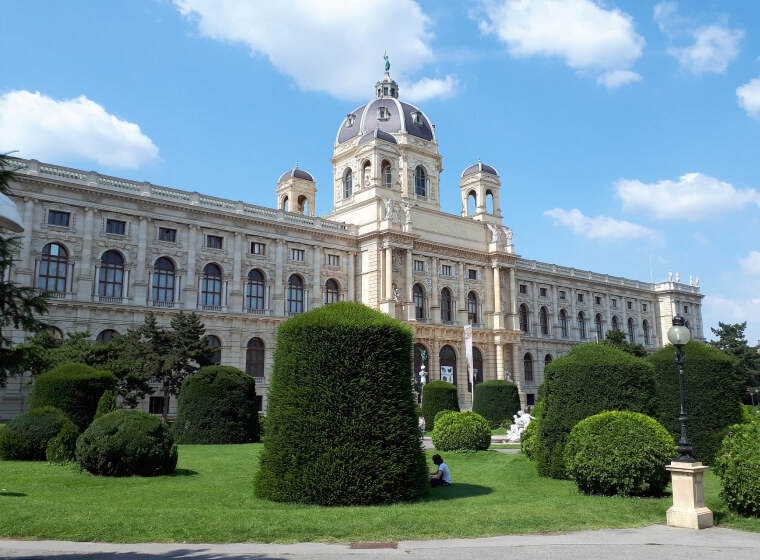
The Kunsthistorisches Museum was built in 1891 near the Hofburg. It provides a worthy setting for the extensive collections of the imperial house. Here visitors can admire a large and unique collection of important works and the world’s largest Bruegel collection. The Kunsthistorisches Museum houses one of the most important art collections in the world.
House of Music is Vienna’s interactive sound museum. Across several floors, children and adults can explore music, acoustics and sound through multimedia installations, experiments and exhibits devoted to Vienna’s rich musical history.
The Austrian Film Museum was founded in 1964 by Peter Kubelka and Peter Konlechner. Located in the Albertina complex, it combines cinema screenings, specialist collections, a library, research and educational activities dedicated to Austrian and international film history.
The Third Man Museum at Pressgasse 25 combines an extensive collection relating to the classic film “The Third Man” with a detailed exhibition on Vienna during the Allied occupation from 1945 to 1955.
Bank Austria Kunstforum Wien at Freyung is one of Vienna’s major venues for temporary art exhibitions. Its programme focuses primarily on classical modernism, post-war avant-garde art and important international and Austrian artists.
The Vienna Funeral Museum at Vienna Central Cemetery explores the history of funerals, cemeteries and Vienna’s distinctive culture surrounding death. Historic objects, multimedia displays and unusual exhibits provide an entertaining and informative perspective on the famous Viennese “cult of the dead”.
ZOOM Children’s Museum at MuseumsQuartier offers interactive exhibitions, workshops and creative spaces for children of different ages. From ZOOM Ocean and the art studio to multimedia and animation activities, the museum encourages discovery through play.
The Museum of Illusions Vienna offers around 70 interactive exhibits, holograms, stereograms and optical illusions. Visitors can experiment with perspective, apparent changes in size and rooms that challenge their sense of balance and perception.
MuseumsQuartier Vienna is one of the city’s largest cultural districts and brings together museums, exhibition spaces, cafés, restaurants and public areas. Highlights include the Leopold Museum, mumok and Kunsthalle Wien.
The Austrian National Library is Austria’s central academic library and one of Vienna’s major historic cultural institutions. Visitors can explore the spectacular State Hall as well as the Papyrus, Globe, Esperanto and Literature museums.
The Vienna Secession is one of the city’s most famous Art Nouveau landmarks. Built in 1898 for the progressive artists’ association associated with Gustav Klimt, it is known for its golden dome and Klimt’s celebrated Beethoven Frieze.
The Vienna Museum of Science and Technology offers around 22,000 square metres of exhibitions exploring technology, science and innovation. Interactive displays and historic objects show how technological developments have influenced everyday life, society and the economy.
The Viktor Frankl Museum Vienna presents the life and work of neurologist and psychiatrist Viktor E. Frankl, founder of logotherapy and existential analysis. Located in the building where he lived and worked until 1997, the museum explores his ideas about meaning, responsibility and human resilience.
The Ernst Fuchs Museum is located in the historic Otto Wagner Villa in Vienna’s 14th district. The building combines Otto Wagner’s architecture with the work of Ernst Fuchs, co-founder of the Vienna School of Fantastic Realism.
The House of Austrian History at Heldenplatz explores Austria’s political and social development from 1918 to the present. Its exhibitions cover the First Republic, National Socialism, the Second Republic and the changing nature of Austrian identity.
The Museum of Military History in Vienna’s Arsenal explores Austrian military history from the Habsburg monarchy through the First World War and into the 20th century. Its collections cover warfare on land and sea as well as technology, politics and society.
Hermesvilla is an elegant former imperial residence in the Lainzer Tiergarten. Built for Empress Elisabeth by Emperor Franz Joseph, the villa offers visitors an insight into the private life of the imperial couple and the artistic interiors of the late 19th century.
Klimt Villa preserves the site of Gustav Klimt’s final studio in Vienna. The artist worked here from 1911 until his death in 1918 and created several important paintings during this period. Reconstructed studio rooms and the historic garden provide an insight into his working environment.
The MAK – Museum of Applied Arts focuses on design, decorative arts and the relationship between art and everyday life. Highlights include furniture, glass, porcelain, textiles, silver, Thonet bentwood furniture and Gustav Klimt’s design for the Stoclet Frieze.
Weltmuseum Wien at Heldenplatz presents important collections from cultures around the world. Its permanent exhibition extends across 14 galleries and includes objects connected with exploration, collecting, cultural exchange and the history of the Habsburg monarchy.
The Sigmund Freud Museum is located in Freud’s former home and practice at Berggasse 19. Freud lived and worked here for decades and wrote many of his most important works at this address. Today, the museum explores his life, the history of psychoanalysis and its lasting influence.
The Theatre Museum Vienna presents more than 300 years of theatrical history through stage models, costumes, props, drawings, photographs and other objects. Its collections cover drama, dance, film, musical theatre and puppetry in the historic Palais Lobkowitz.
The Augarten Porcelain Manufactory and Museum in Vienna’s 2nd district offers an insight into traditional Viennese porcelain production. Visitors can discover historic designs, learn about the craftsmanship involved and explore the manufactory’s long history.
Belvedere 21 is Vienna’s Belvedere museum for contemporary art. The striking building was designed by Karl Schwanzer as Austria’s pavilion for the 1958 Brussels World’s Fair and today hosts exhibitions, performances, film, music and other contemporary cultural programmes.
Chocolate Museum Vienna in the Prater takes visitors on an interactive journey through the history of cocoa and chocolate. Exhibitions, games, chocolate sculptures and workshops make it an entertaining destination for families and chocolate lovers.
The Roman Museum Vienna at Hoher Markt explores the history of ancient Vindobona. Archaeological remains, interactive displays and everyday Roman objects provide an accessible introduction to Vienna during the Roman period.
The Natural History Museum Vienna is one of the world’s important natural-science museums. Its collections cover Earth history, minerals, meteorites, anthropology, prehistoric life and numerous other fields across dozens of impressive galleries.
Mozarthaus Vienna at Domgasse 5 contains the only surviving Vienna apartment once occupied by Wolfgang Amadeus Mozart. The composer lived here from 1784 to 1787, during one of the most important and productive periods of his career.
Museum Hundertwasser at KUNST HAUS WIEN presents the world’s largest collection of works by Friedensreich Hundertwasser. The colourful and unconventional building reflects the artist’s distinctive approach to art, architecture and nature.
ALBERTINA MODERN at the Künstlerhaus is one of Vienna’s major museums for modern and contemporary art. Opened in 2020 as another location of the ALBERTINA, it presents an extensive collection of Austrian and international art from the post-war period to the present.
The Jewish Museum Vienna explores Jewish history, culture and religion in Austria. Its two central locations, Palais Eskeles on Dorotheergasse and Museum Judenplatz, present exhibitions ranging from historical collections to contemporary Jewish life.

Stay close to Vienna's attractions

Book a comfortable Wien Stay Apartment and enjoy easy access to the city’s best-known attractions.